
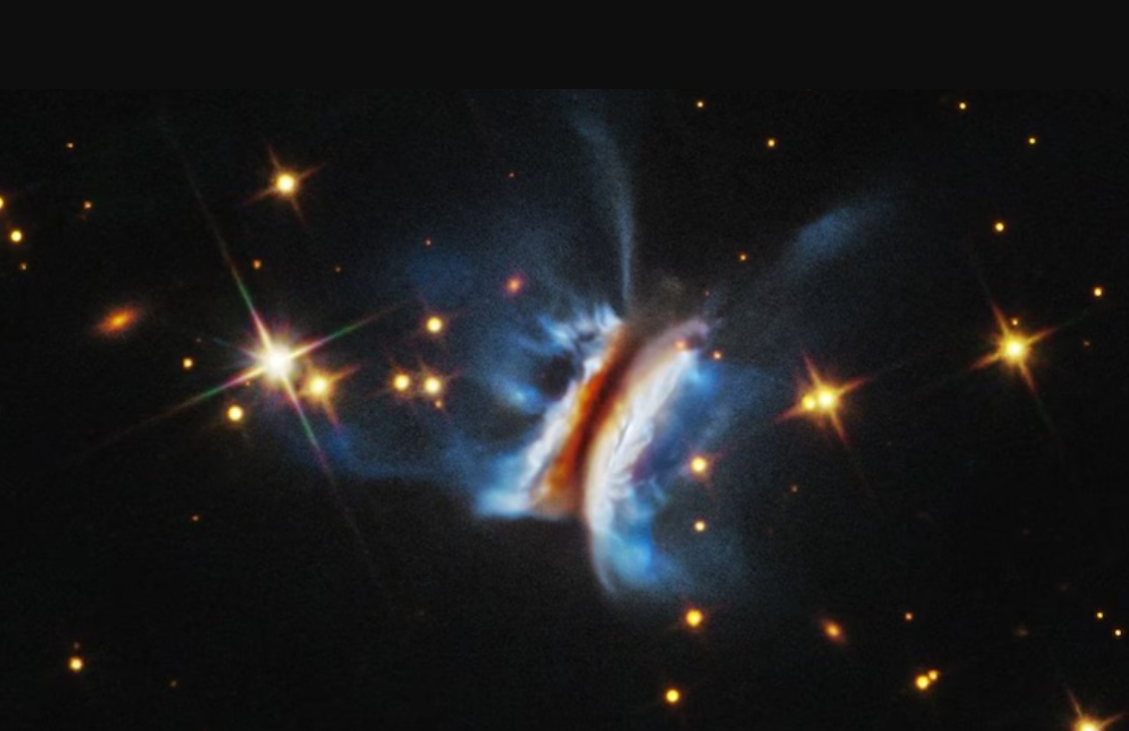
Astronomers using NASA’s Hubble Space Telescope have identified the largest planet-forming disk ever observed, revealing a violent and chaotic environment that challenges long-standing theories about how planets take shape.
The massive disk of gas and dust surrounds a young star and appears wildly unstable — far from the calm, orderly disks scientists typically associate with planet formation. Researchers say the discovery suggests planets may emerge in far more extreme and turbulent conditions than previously believed.
A Colossal Cosmic Structure
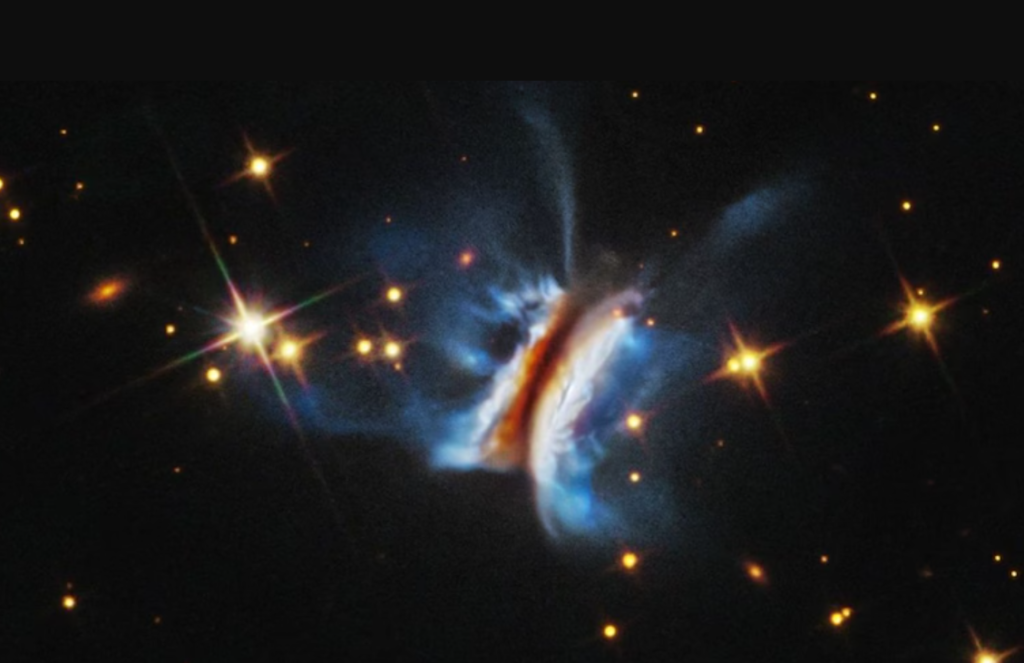
The disk encircles a young star known as IRAS 23077+6707, located roughly 1,000 light-years from Earth. Astronomers have nicknamed the system “Dracula’s Chivito” because of its dramatic, asymmetrical appearance.
Stretching nearly 400 billion miles across, the disk is about 40 times larger than the Kuiper Belt in our own solar system — a scale that has stunned researchers.
Why Scientists Didn’t Expect This
Most planet-forming disks appear relatively smooth and well-organized. In contrast, this one looks distorted, uneven, and highly unstable. Streams of dust rise above and below the disk, and some structures appear only on one side, breaking the symmetry scientists usually observe.
Such chaos suggests powerful forces — including gravity, radiation, and turbulence — are shaping the system. Until now, researchers did not believe a disk this massive could remain so disordered while still forming planets.
Rethinking How Planets Are Born
The uneven patterns challenge existing models of planetary formation, prompting astronomers to reconsider how early solar systems evolve. Scientists now believe planets may form not only in calm environments, but also amid violent cosmic upheaval.
Some researchers think the disk could resemble an exaggerated early version of our own solar system, offering a rare window into how worlds emerge from disorder.
A Reminder of the Universe’s Complexity
For scientists, the discovery reinforces one key lesson: the universe continues to form planets in ways that are still not fully understood. Hubble’s observation raises new questions about how common such chaotic systems may be — and how many worlds might be born under similarly extreme conditions.