
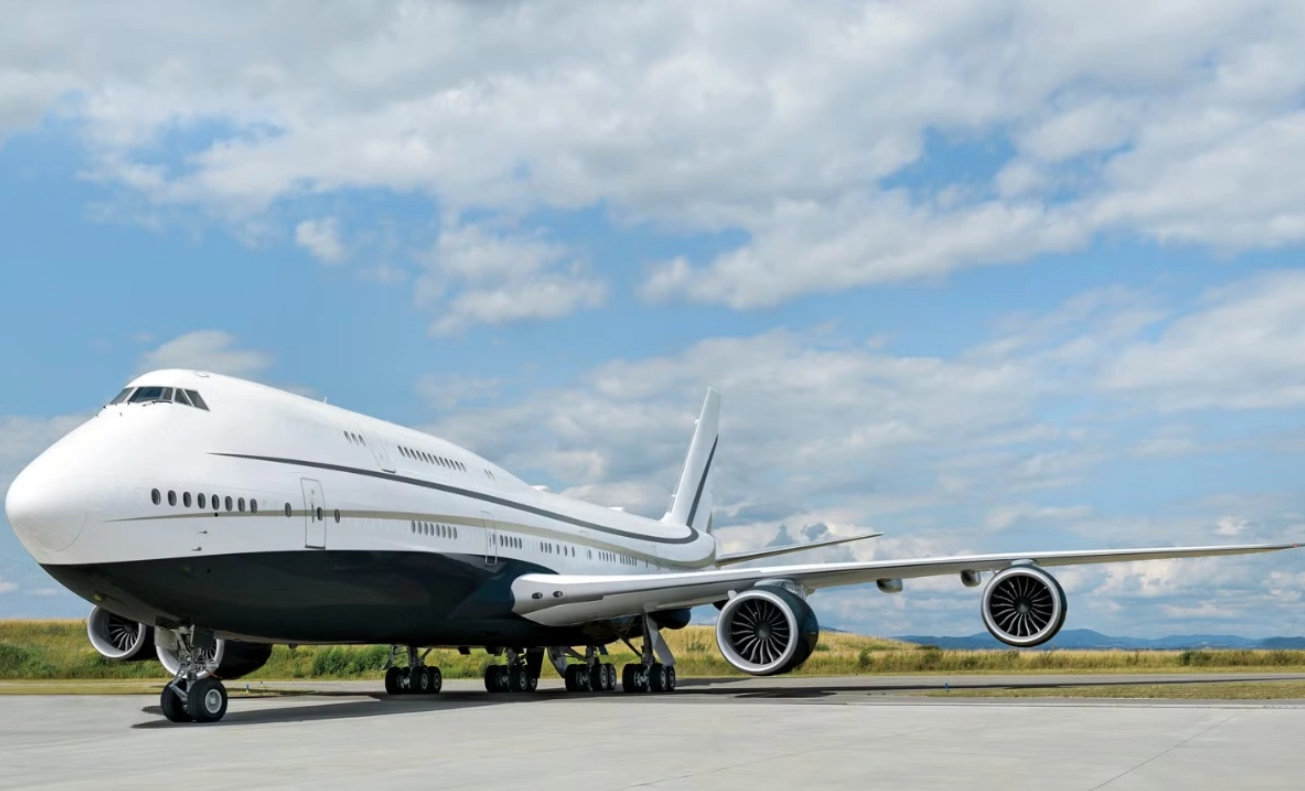

It was supposed to be one of the most luxurious private aircraft ever created — a Boeing 747-8 BBJ, often called a “flying mansion.” Instead, it ended up dismantled in the Arizona desert after barely leaving the ground.
The first Boeing 747-8 BBJ logged just 30 flight hours across 16 flights before being retired and scrapped in the United States, making it one of the shortest-lived jumbo jets in aviation history.

A Palace in the Sky That Never Found a King
The aircraft was built as a Boeing Business Jet (BBJ) version of the 747-8, a heavily modified jumbo designed for governments, royalty, and ultra-wealthy clients. With more than 5,000 square feet of cabin space and a range exceeding 10,000 miles, it was larger than any private jet ever produced.
Plans called for an ultra-luxury interior featuring bedrooms, lounges, meeting rooms, and lavish entertainment areas. But that transformation never took place.
The jet was originally intended for Saudi Crown Prince Sultan bin Abdulaziz Al-Saud. After his death in 2011, the aircraft lost its buyer before it was ever completed.
Years in Storage, No Buyers in Sight
Delivered in 2012 without an interior, the unused jumbo spent nearly a decade parked at EuroAirport Basel Mulhouse Freiburg, quietly aging while Boeing searched for a new owner.
In 2017, the aircraft was put up for sale for $95 million — a steep drop from its original estimated price of around $350 million. Even with that discount, no buyers emerged.
The reason was simple: finishing and operating a four-engine 747 makes little financial sense today. Installing a luxury interior alone could cost $30–50 million, not including operating, fuel, and maintenance expenses.
Unless you’re a government with unlimited resources, the economics just don’t work.
From Showpiece to Spare Parts
Eventually, Boeing repurchased the aircraft and ferried it to an aircraft boneyard in Arizona. There, its engines — still worth tens of millions of dollars — were removed, and the rest of the jet was dismantled for parts.
By aviation standards, its retirement was shockingly early. Most commercial aircraft remain in service for 25 to 30 years, flying tens of thousands of hours before being scrapped or preserved.
This 747-8 BBJ was barely 10 years old when it met its end.
A Sign of Changing Times in Aviation
The fate of the “flying mansion” highlights a shift in the aviation world. Airlines and private operators increasingly favor efficiency over extravagance, prioritizing twin-engine aircraft that burn less fuel and cost far less to maintain.
Even unmatched luxury and size are no longer guarantees of success.
In the end, the short life of this Boeing 747-8 BBJ stands as a reminder: in modern aviation, practicality often beats prestige — even when the aircraft is a palace with wings.