
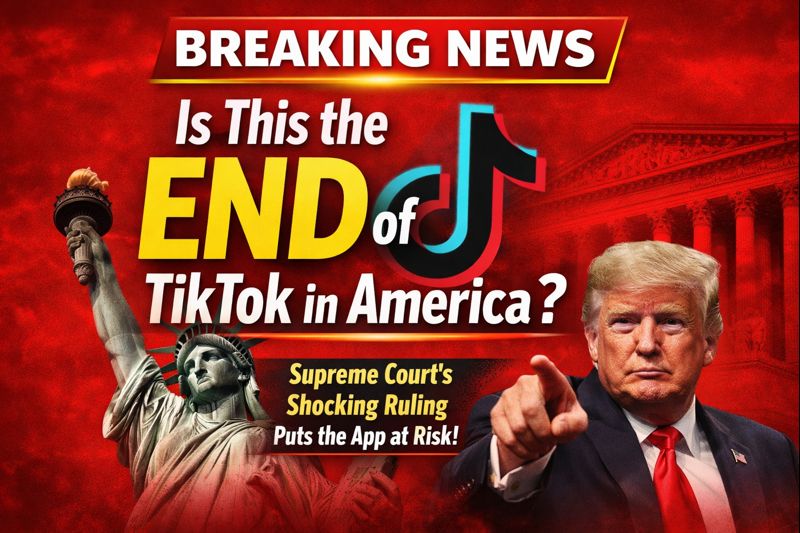
The U.S. Supreme Court’s recent ruling on TikTok has placed the popular short-form video platform at the center of a growing legal and political storm, raising fresh questions about free speech, national security, and the future of one of America’s most widely used apps.
Under the decision, a federal law that could effectively force TikTok to shut down in the United States remains in place. The ruling means TikTok now operates under the constant risk that the app could be taken offline through executive action, depending on how the law is enforced by the White House.
Why the Decision Matters
At the heart of the case is the U.S. government’s argument that TikTok poses a national security risk due to its Chinese ownership. Lawmakers have long claimed that user data could be accessed by foreign authorities, a concern TikTok has repeatedly denied.
By upholding the law, the Supreme Court deferred heavily to the government’s national security claims — a move that legal experts say gives federal authorities unprecedented leverage over a major speech platform used daily by tens of millions of Americans.
Free Speech Concerns Intensify
Critics argue that the ruling threatens First Amendment protections by allowing the government to restrict or pressure a communication platform without clear evidence of wrongdoing. Civil liberties advocates warn that granting such broad power could set a dangerous precedent, enabling future administrations to target other digital platforms under the banner of national security.
“The real impact of this decision is not just about TikTok,” legal analysts say, “but about how much control the government can exert over online speech.”
Political Uncertainty Ahead
The decision also injects uncertainty into TikTok’s future. While the app continues to operate for now, its long-term status may depend on political decisions rather than court rulings. A change in administration or executive priorities could quickly alter the platform’s fate.
Former President Donald Trump has previously signaled willingness to act against TikTok, and the ruling leaves the door open for swift enforcement if political conditions align.
A Broader Debate Beyond TikTok
Less than a year after the ruling, critics say time has already exposed its consequences. Instead of resolving security concerns, the decision has amplified fears about government overreach, digital censorship, and the fragile balance between safety and free expression in the internet age.
As the debate continues, TikTok has become more than just a social media app — it is now a symbol of a larger struggle over who controls speech in the digital era and how far national security arguments can go in limiting it.