
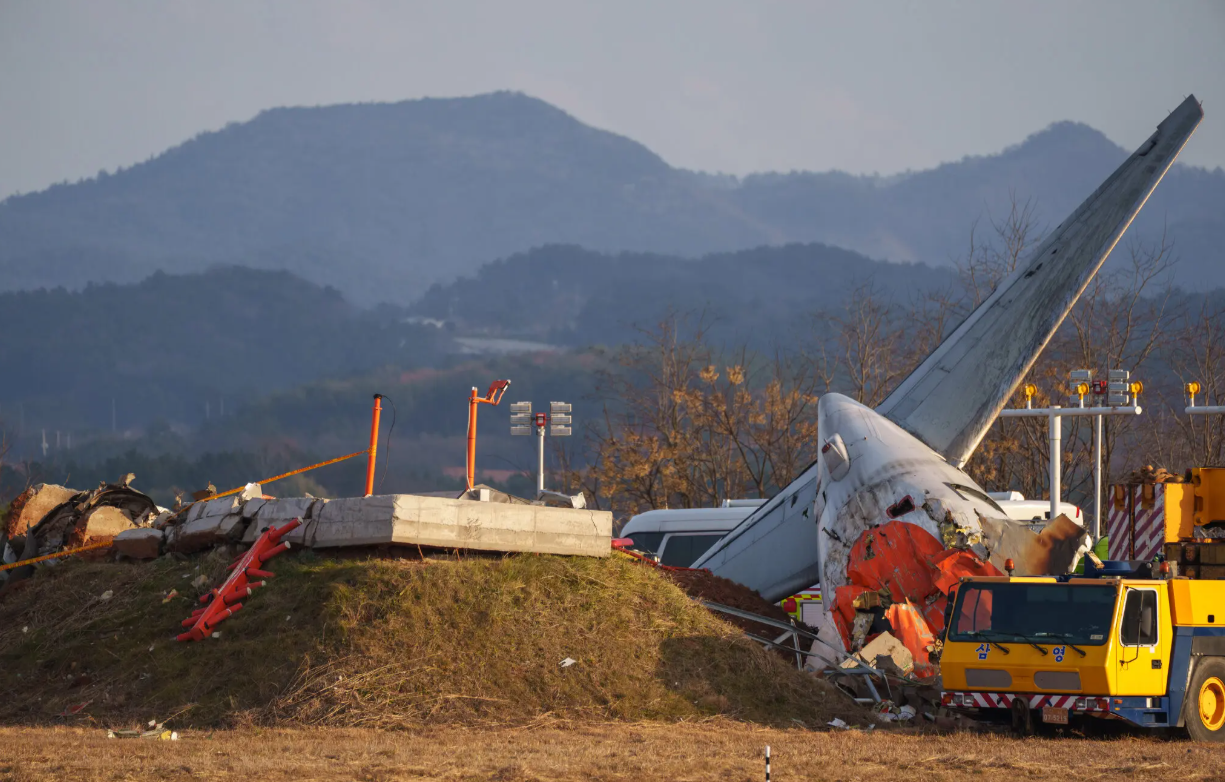
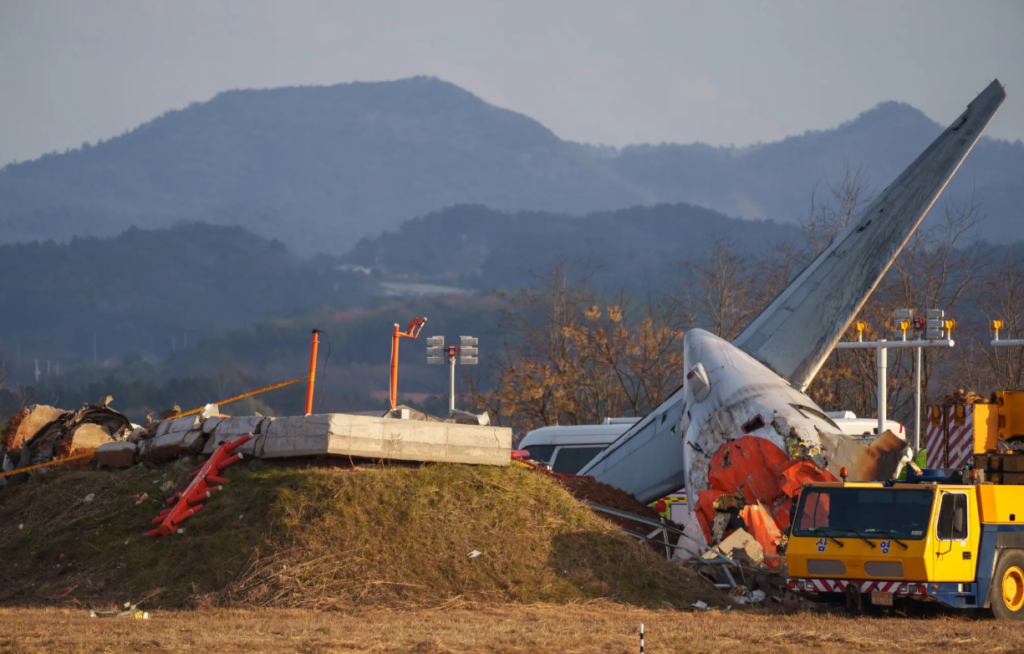
One year after the deadliest plane crash ever to occur on South Korean soil, families of the victims say they are still searching for clear answers — and justice.
Relatives of those killed in the Jeju Air Flight 2216 disaster continue to occupy tents inside Muan International Airport, refusing to leave until investigators fully explain what caused the tragedy that claimed 179 lives.
“I don’t understand why we are still asking the same questions,” said Kim Yu-jin, a spokesperson for the victims’ families, during a recent news conference in Gwangju. Kim lost both parents and her brother in the crash.
What Happened That Day
On December 29, 2024, the Jeju Air flight from Bangkok attempted an emergency landing at Muan Airport after striking a flock of birds. The aircraft skidded along the runway, slammed into a concrete barrier, and burst into flames. Only two people survived.
While investigators confirmed the bird strike and runway impact, many critical questions remain unanswered — including whether infrastructure failures and ignored safety warnings played a role.
Investigations Under Fire
The main probe is being led by South Korea’s Aviation and Railway Accident Investigation Board, which operates under the Transport Ministry. Families argue this structure creates a conflict of interest, since the same ministry oversees airport safety nationwide.
Investigative reporting has revealed that officials had previously been warned about:
- Large flocks of birds near Muan Airport
- The dangers posed by concrete berms at the ends of runways
Despite these warnings, no corrective action was taken before the crash.
When investigators attempted to present interim findings, families blocked briefings, demanding an independent investigation body with no ties to the Transport Ministry.
Safety Promises — Partly Kept
In response to public outrage, the Transport Ministry pledged sweeping reforms, including:
- Upgrading runway infrastructure at nearly half of the country’s 15 commercial airports
- Strengthening oversight of low-cost airlines
- Expanding wildlife patrols and bird-detection systems
Some measures have been implemented, such as hiring more patrol staff and installing additional detection cameras. However, major construction projects — including the removal of concrete runway barriers at seven airports — remain unfinished.
As of late December, renovation work had only been completed at Pohang Gyeongju Airport and Gwangju Airport. Work at Muan Airport, where the crash occurred, has not yet begun.
Officials cited sensitive relations with victims’ families as one reason for the delay.
Push for an Independent Probe
Families and aviation safety experts insist that only a fully independent investigation can restore public trust.
Their efforts are beginning to yield results. In December:
- Families protested overnight outside the presidential office in Seoul
- A planned interim briefing by the existing board was canceled
- A National Assembly committee approved legislation to create a new independent investigation panel
The bill still requires a full parliamentary vote.
“Independence is essential for a fair investigation,” Kim Yu-jin said. “Only then can we prevent this from happening again.”
International Pressure and Deadlines
Aviation experts note that the U.S. National Transportation Safety Board underwent a similar transition decades ago, separating from the Department of Transportation to ensure independence.
Under international aviation rules set by the International Civil Aviation Organization (ICAO), South Korea is expected to release an interim report within one year if a final report is delayed. Missing that deadline could result in a lower international safety audit rating.
Officials acknowledged the uncertainty but said investigative work continues even as lawmakers debate the new panel’s creation.
For families of the victims, however, the wait has already gone on far too long.